Introducing the Healthcare Chatbot: What You Need to Know and Why
March 2023 · Updated September 14, 2026
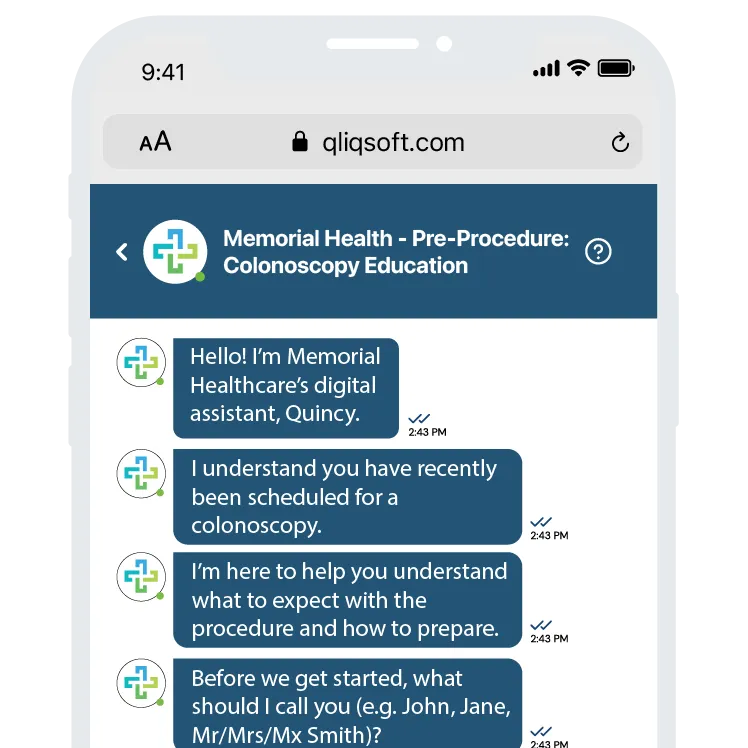
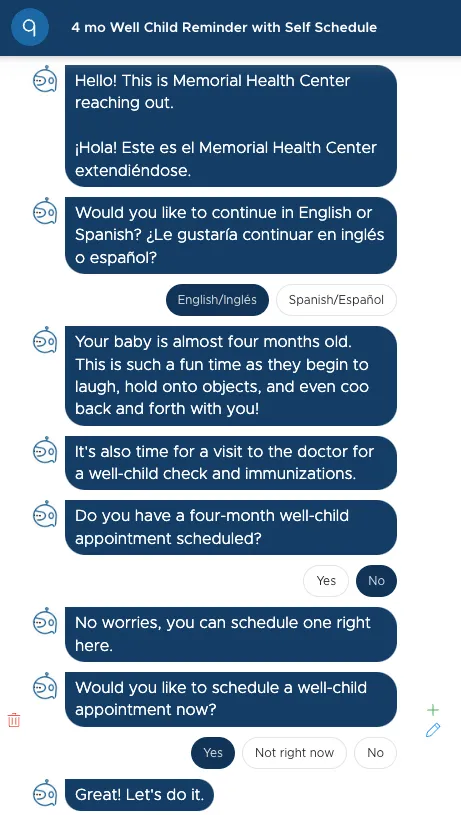
Although chatbots are popping up everywhere, there is often confusion about what they do and why it matters. Here is a quick discussion of the use of chatbots in healthcare applications.
What is a chatbot?
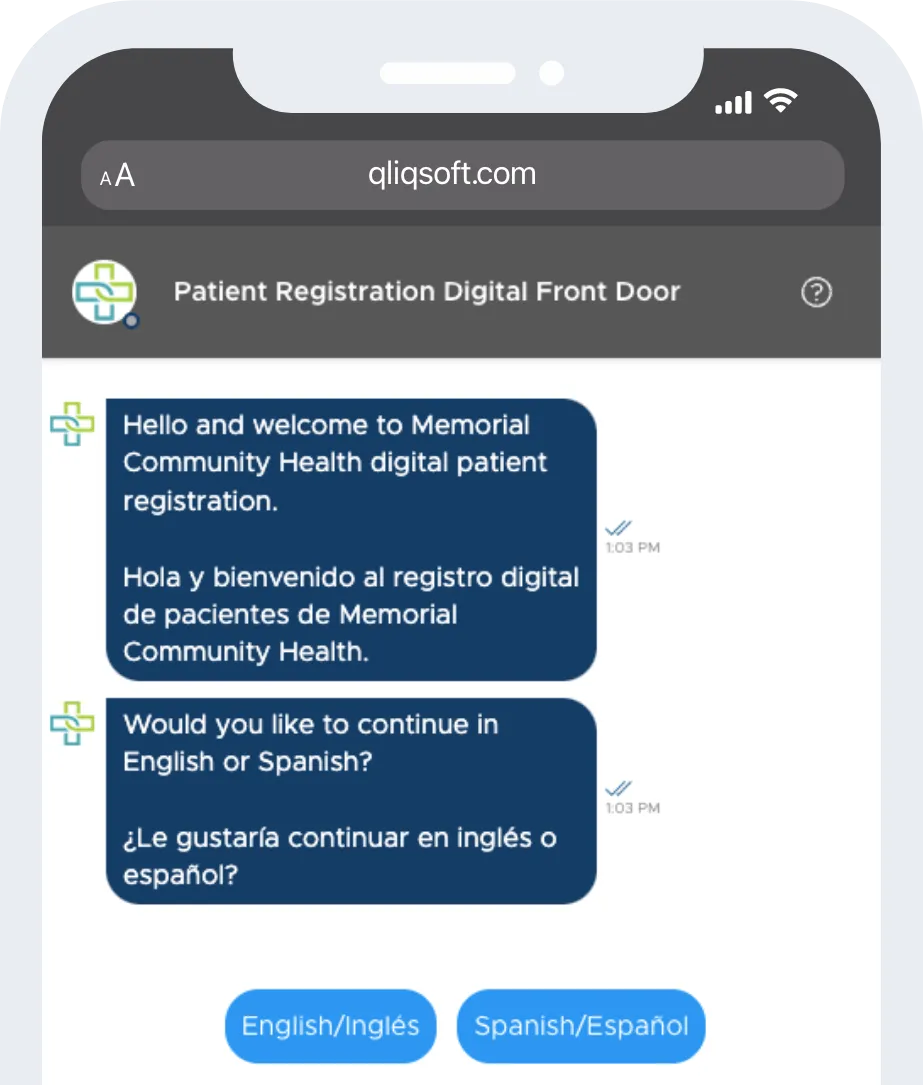
A chatbot is a software application powered by artificial intelligence (AI) designed to automate time-consuming, repetitive, and routine tasks. Chatbots act as conversationalists capable of simulating natural language (for example, English or Spanish) to interact in a human-like way with many people at once. Chatbots can also incorporate visual aids such as forms, educational documents, and videos to augment a conversation.
Why does this matter to healthcare?
In healthcare, chatbots are commonly deployed as "virtual assistants" or "virtual humans." They proactively engage with patients to offload administrative tasks traditionally handled by physicians, nurses, clinicians, and care team members. If a patient has a complicated problem to resolve, a healthcare employee can take over the chat to assist. With minimal human support, providers can use chatbots day and night to guide patients through a series of self-service activities, which include:
- Schedule and change appointments
- Complete the intake process
- Prepare for procedures
- Request prescription refills
- Communicate test results
- Review the after-visit summary
- Arrange video consults
- Connect with in-network providers
- Close gaps in care
- Submit payments
What are the types of chatbots?
Knowing whether you are communicating with a human being or a custom-built chatbot can be challenging. There are two types of chatbots that respond to queries based on smart algorithms:
- Rules-based chatbots are structured to provide pre-determined answers to questions based on rules they have been "trained" on.
- AI chatbots go beyond simply answering questions. They learn from repeated interactions with users to generate usually correct answers to complex and unseen queries.
Why are chatbots important to healthcare?
The lingering effects of the COVID-19 pandemic intensified clinician burnout and contributed to the Great Resignation. Critical worker shortages are choking the U.S. healthcare system, and chatbots are one way to relieve clinicians of administrative work so they can focus on patients.
- High healthcare worker turnover persists. U.S. Bureau of Labor Statistics employment estimates indicate that the healthcare sector lost nearly half a million workers between February 2020 and 2022.
- The pain of labor loss spans all healthcare sectors. Inpatient, community clinics, ambulatory practices, medical specialties, and post-acute settings are all experiencing staffing shortages.
In the State of Automation 2022 Report, a national survey of 1,000 American healthcare professionals, respondents said on average that their staff spend 57.5 percent of their time on repetitive tasks such as data entry and documentation. Employee burnout emerged as a top concern because of that administrative burden. These issues are costly, affecting physician retention, health system profitability, and, most importantly, patient outcomes. McKinsey & Company reported that the worsening clinical labor shortage is a significant contributor to the projected increase in healthcare costs over the following five years.
What is more, today's consumer has adopted digital engagement in other aspects of life and expects seamless transactions and engagement online as part of clinical care. Patients are smarter, more skeptical, and have more options in healthcare. Now more than ever, healthcare organizations need to attract, retain, and continually satisfy a high patient volume wherever those patients are.
Connecting with patients where they are
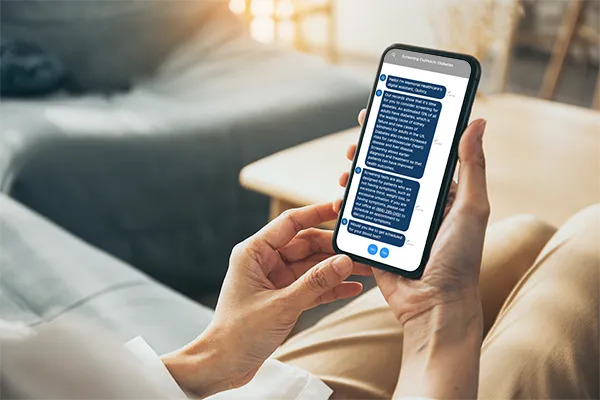
Healthcare chatbots provide a tireless, constant source of 24/7 convenience for consumers. Patients want instant answers at the first point of contact, not generic information that leaves them to work out what it means. Chatbots respond immediately to patient-initiated requests and reach out proactively to provide and collect data. Patients are more willing to share personal information thanks to the sense of privacy a chat provides, which lessens the fear of being judged. The same qualities make chatbots useful for chatbot-to-staff interactions that contribute to profitability and practice efficiency while improving the patient experience.
How can chatbots address healthcare challenges?
A healthcare chatbot delivers much-needed relief to overwhelmed healthcare workers, supporting a healthier balance between life and work that reduces burnout and improves retention. The accelerated adoption of telehealth gave patients and providers a new willingness to use digital tools, resulting in new models of virtual care. The healthcare industry is embracing chatbot technology, with the market projected to grow to $3.62 billion by 2030. In one survey, 77 percent of call agents reported that they use technology like chatbots to automate routine tasks so they can focus on more complex work, which increases revenue by reducing operational costs.
Continued refinement of regulatory processes is expected to expand patient access to and reimbursement of telehealth services, further increasing chatbot demand. With the influence of AI, a custom-built healthcare chatbot is considered a game changer for patient service. By modernizing the healthcare experience, chatbots increase revenue and efficiency by keeping satisfied patients in network and driving incremental revenue by closing gaps in care.
Chatbot features you need for healthcare
These six must-have features help a healthcare chatbot deliver transformative, sustainable patient engagement:
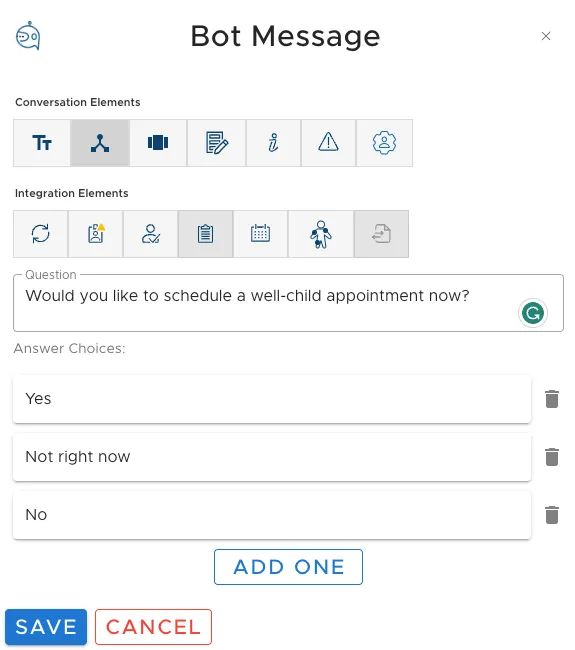
- Self-service tools. No-code tools that let provider end users design and quickly modify unique chatbot workflows minimize ownership costs and support rapid learning cycles as organizations learn and optimize use.
- EHR integration. Your chatbot should integrate with any electronic health record, whichever system you run, to further minimize staff burden and streamline shared data collection. See how QliqSOFT integrates.
- Easy customization. Services that help you identify, implement, and refine your chatbot use across many use cases within your workflow are pure gold. The more personalized and customized the chatbot, the more efficiently it meets patient needs and behavioral patterns.
- Immediate, proven results. Expect automating tasks to produce immediate results. Capture pre- and post-measurements and use chatbot analytics to measure and prove ROI.
- Best practices. Creating an effective chatbot is achievable by following proven guidance on how best to use the tool so that patients and staff are served precisely. Remember: user experience is everything.
- Designed for HIPAA compliance. A healthcare chatbot must provide a HIPAA-secure experience that addresses the complexity of healthcare privacy and security requirements when handling sensitive health data, including protected health information (PHI).
Launch your chatbot strategy
Chatbots were the first step. QliqSOFT's AI Voice Agents now carry the same workflows onto the phone, and HIPAA-compliant texting and digital forms handle the follow-through. Tell us your challenges and we will map them to a workflow you can see running in a demo.