Quincy for Hospice: QuietWatch
September 30, 2025
Know how our QuietWatch streamlines hospice onboarding, enhances family engagement, and ensures regulatory compliance to deliver improved end-of-life care.


Executive Summary
The journey through hospice care often feels like two extremes: the intense adjustment of the first 14 days and the profound changes of the last 14 days. Yet in between lies a long, quiet stretch - a time when families may feel uncertain, isolated, or unsure how to stay engaged in the care journey.
For caregivers and family members, this middle period is deceptively silent. Without structured touchpoints, critical emotional, spiritual, or logistical needs may go unnoticed until they reach a crisis point. Families may miss signs of decline, delay in seeking support, or feel abandoned by the care team.
QuietWatch by QliqSOFT is designed to change that reality - providing structured check-ins, educational resources, scored assessments, and secure communication pathways to ensure families feel supported, informed, and connected throughout this essential stage.
A Compassionate Safety Net Between the First and Last 14 Days
Understanding the Problem
In hospice, the numbers often tell a striking story. Statistics clearly highlight the intensity of the early days of enrollment and the fragile final weeks of life. However, between these two periods - during the more extended middle period - there exists a quiet gap. Families remain physically present, yet emotionally, they often feel like they are running on empty. Caregiver fatigue sets in, leaving them drained but unseen.
Without structured check-ins or assessments, critical needs can slip through the cracks. Depression, anxiety, spiritual concerns, or signs of caregiver burnout may go unnoticed, hidden beneath the surface of “coping.” Families also miss out on timely education. Unless prompted, they may never access the resources that prepare them for what lies ahead.

The most painful gap comes near the end. Families often struggle to recognize the signs of active dying. This lack of awareness delays the transition into the last 14 days of care, a time when specialized support could bring comfort, guidance, and peace. By the time they realize what’s happening, valuable opportunities for emotional preparation and dignified care planning may have already passed.
The hidden middle of hospice care is more than just a stretch of time - it’s a chapter where proactive outreach can transform exhaustion into support, uncertainty into knowledge, and fear into readiness.
QuietWatch Workflow: Calibrate Support to Family Needs
Caring for a patient means caring for the whole family. Federal requirements remind us that hospice agencies must not only provide direct services but also offer meaningful education and support to family caregivers who shoulder a significant portion of the daily responsibilities. QuietWatch helps organizations meet these mandates with confidence, while also creating a better patient and caregiver experience.
With QuietWatch, families get practical education right when they need it most. Caregivers receive short videos, checklists, and guided instructions directly on their phones or tablets, empowering them to manage medications, assist with daily care, and understand the philosophy behind hospice. This document ensures compliance while providing families with peace of mind.
QuietWatch automatically sends ongoing assessments to caregivers, providing critical input into ongoing hospice plan-of-care reviews. Structured caregiver assessments capture feedback between visits, giving interdisciplinary teams actionable insights that are uploaded into the medical record and guide care planning.
QuietWatch also supports respite care. Caregiver fatigue often remains unspoken until it develops into a crisis. QuietWatch detects early signs of strain using scored assessments, enabling organizations to offer respite stays proactively, before stress overwhelms the family.
As patients reach their final days, QuietWatch provides additional clarity. The Dying Phase Classification form helps us recognize when someone is entering the last two weeks of life. This structured caregiver input ensures that the care team knows when to update the plan of care appropriately and helps prepare families with the right resources and support during this critical phase.
Regulatory & Compliance Considerations
- HIPAA: PHI behind secure links; all submissions encrypted and time‑stamped.
- TCPA: Opt‑out language templated; quiet‑hours honored.
- CMS: Support CMS hospice requirements for caregivers
- SOC 2: QliqSOFT maintains SOC‑aligned controls.
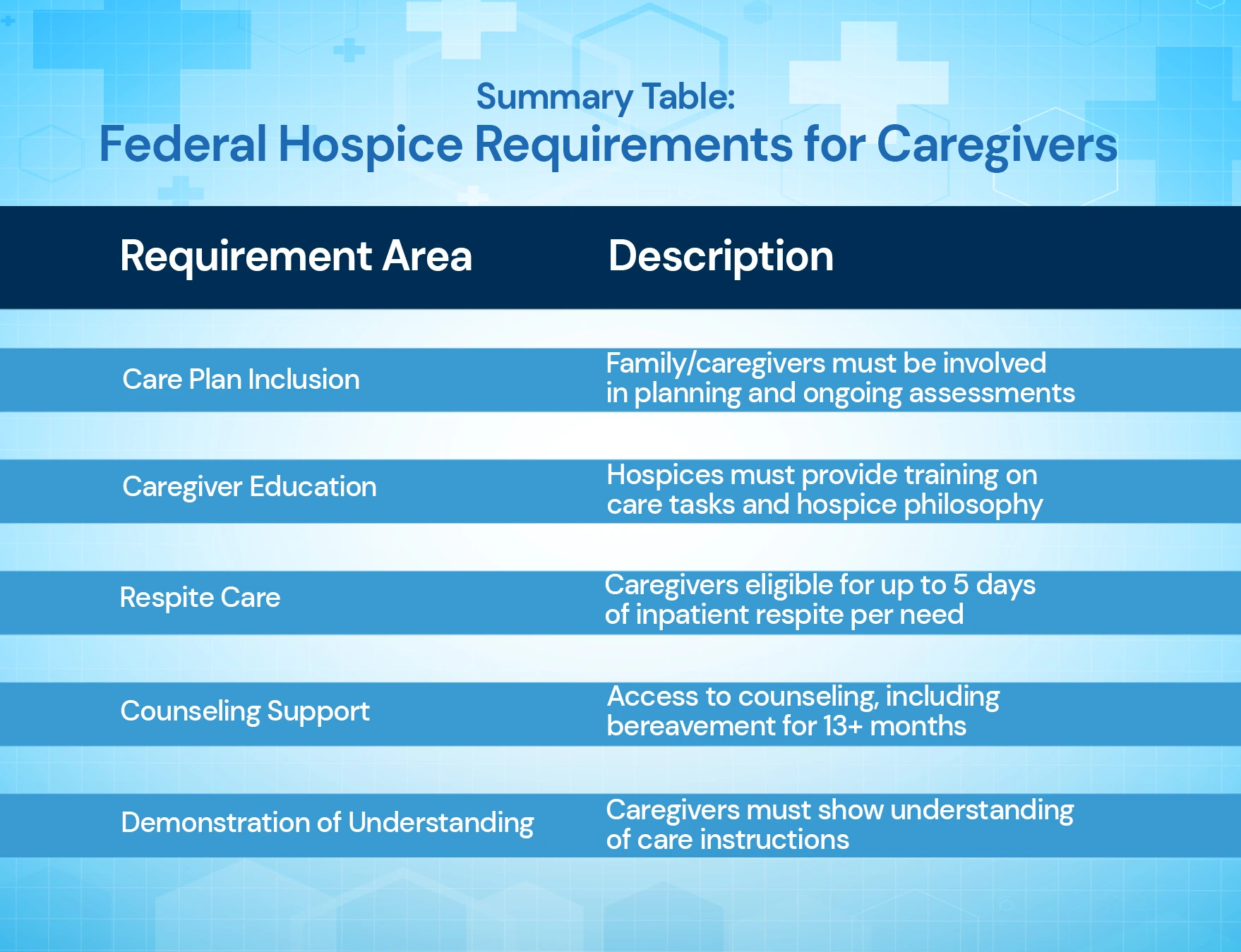
QuietWatch transforms these federal obligations into engaging, digital-first caregiver touchpoints - reducing compliance risk while enhancing caregiver experience.
The QuietWatch Solution
QuietWatch is QliqSOFT’s proactive middle-phase care program, bridging the stretch between the first and last 14 days of hospice with structured, compassionate outreach.
Key Features:
Regular Check-Ins: Scheduled messages prompt families to complete brief, scored assessments and provide educational support.
Scored Forms: Caregiver responses are automatically evaluated to flag risk areas (emotional distress, caregiver fatigue, social needs).
Patient assessment: Families receive a simple weekly scored evaluation to help identify whether the patient may be entering the last 14 days of life. This structured form evaluates physical and behavioral indicators such as increased sleep, reduced intake, withdrawal, or changes in responsiveness. Alerts are generated when results cross thresholds, prompting the care team to initiate last 14 days’ care planning.
Caregiver assessment: Identify the family's need for respite care.
Educational Outreach: Families receive curated videos, articles, and resources tailored to their current stage.
Escalation Pathways: High-risk scores or concerning responses trigger immediate HIPAA-secure communication, connecting families to social workers, counselors, or chaplains.
Family Support: Families can request a secure chat or a counseling or spiritual care session with one text via the organizational webpage.
Best Practices
- Keep caregiver messages short, with one clear CTA.
- Always include the 24/7 number and explicit examples of when to call.
- Respect language & accessibility preferences.
- Standardize templates, allow local personalization.
- Review escalations within 2 hours during business hours.
- Close the loop with the caregiver: confirm receipt of the assessment.
Implementation Plan (30 Days)
This solution can be implemented quickly, as illustrated in the following example.
Prerequisites: Form the project team. The hospice provides a list of certifying clinicians, current documents and education materials, escalation rules, and baseline performance metrics.
Week 1: Map triggers, finalize questions, confirm opt‑out, and language variants.
Week 2: Configure assessment and automation; prepare escalation rules; set EMR write‑back.
Week 3: Pilot on one team/site; validate scoring and workflow; tune thresholds.
Week 4: Train staff, expand system‑wide, and monitor KPIs daily for two weeks. Optimize, as needed.
Month 6: Determine current KPI performance and measure improvement.
KPIs to Track
- After-hours escalation calls.
- Number and percentage of returned surveys.
- Preventable utilization.
- Caregiver confidence and satisfaction.
Conclusion
The middle stage of hospice care does not need to be silent. QuietWatch transforms the “long wait” into a time of meaningful support, education, and early detection - ensuring families never feel alone, and providers can deliver the compassionate, proactive care they aspire to.
Frequently Asked Questions (FAQs)
What is “Quincy for Hospice: QuietWatch”?
QuietWatch is a mid-hospice support approach designed to create a compassionate “safety net” for families between the first days of hospice and the last 14 days.
What problem does QuietWatch address in hospice care?
It focuses on the “middle” period of hospice, when families can feel like they’re navigating alone, caregiver fatigue builds, and signs of change can be missed without structured outreach.
How does the QuietWatch workflow support family needs?
It delivers calibrated outreach and structured check-ins that provide caregiver education, reminders, and guidance, helping caregivers manage tasks, spot changes, and feel supported.
What kinds of communications are included in QuietWatch?
Scheduled messages and check-ins that prompt brief assessments, deliver educational support, and provide clear next steps, so families know what to do and when to call.
How does QuietWatch help hospice teams act on caregiver needs?
Caregiver responses can be evaluated to identify risk areas, generate actionable insights for the care team, and support follow-up when a caregiver needs additional help.
What are the key features included in the QuietWatch solution section?
Quincy’s QuietWatch lists items such as regular scheduled check-ins, scored forms to evaluate caregiver risk areas, patient assessments to help identify when the last 14 days may be nearing, caregiver assessments to identify needs like respite, educational outreach, escalation pathways for high-risk responses, and family support pathways.
What best practices are recommended for caregiver outreach in QuietWatch?
Keep messages short with one clear CTA, include the 24/7 number with examples of when to call, respect language/accessibility preferences, standardize templates while allowing personalization, review escalations quickly during business hours, and close the loop by confirming the caregiver received the assessment.