Quincy for Hospice: Last14Days of Hospice Care
October 7, 2025
QliqSOFT’s guides families and care teams through the Last14Days of hospice care solution, offering clarity, structure, and digital support.


Executive Summary
Families often miss or misread the signs that a loved one is entering the last 14 days of life. Clinically, this is characterized by rapid functional decline, decreased intake, changes in breathing, mottling, and reduced responsiveness. Operationally, it creates late escalations, missed billable days, and uneven family preparedness.
QliqSOFT transforms these patterns into a repeatable, scored screening workflow using a caregiver-friendly Last14Days assessment. The assessment detects phase progression, alerts the care team, and initiates a Last14Days Care Plan - all while recording an auditable trail and documenting structured results in the EMR.
The last days cannot be predicted perfectly, but they can be prepared for.
Understanding the Problem
A family sits by their loved one’s bedside, noticing subtle changes - less eating, more fatigue - but they aren’t sure what those signs mean. Without clear guidance, they wait until breathing becomes labored or pain suddenly spikes before reaching out. By then, it’s already an urgent call.
The hospice team responds as best they can, but triage happens over the phone, relying on uneven caregiver descriptions and subjective narratives. Essential details get lost, and when symptoms worsen after hours, nurses scramble to respond under pressure. Fragmented documentation makes it harder to demonstrate why care should be escalated or to meet quality metrics, such as “visits in the last days of life.”

The result is missed opportunities - symptoms not managed early enough, families left anxious and unprepared, and care that feels reactive instead of anticipatory. For operations, the ripple effects are costly, including avoidable spikes in after-hours demand, preventable ED transfers, rework in documentation, missed billable days, and a decline in quality scores. For compliance purposes, the gaps in records make it difficult to demonstrate when escalation criteria were met or what actions were taken. And financially, late detection quietly drains revenue through overtime costs and lost reimbursement opportunities.
What looks like “just another missed check-in” adds up to a larger story - a care experience that falls short of what families need, and what hospices strive to be known for.
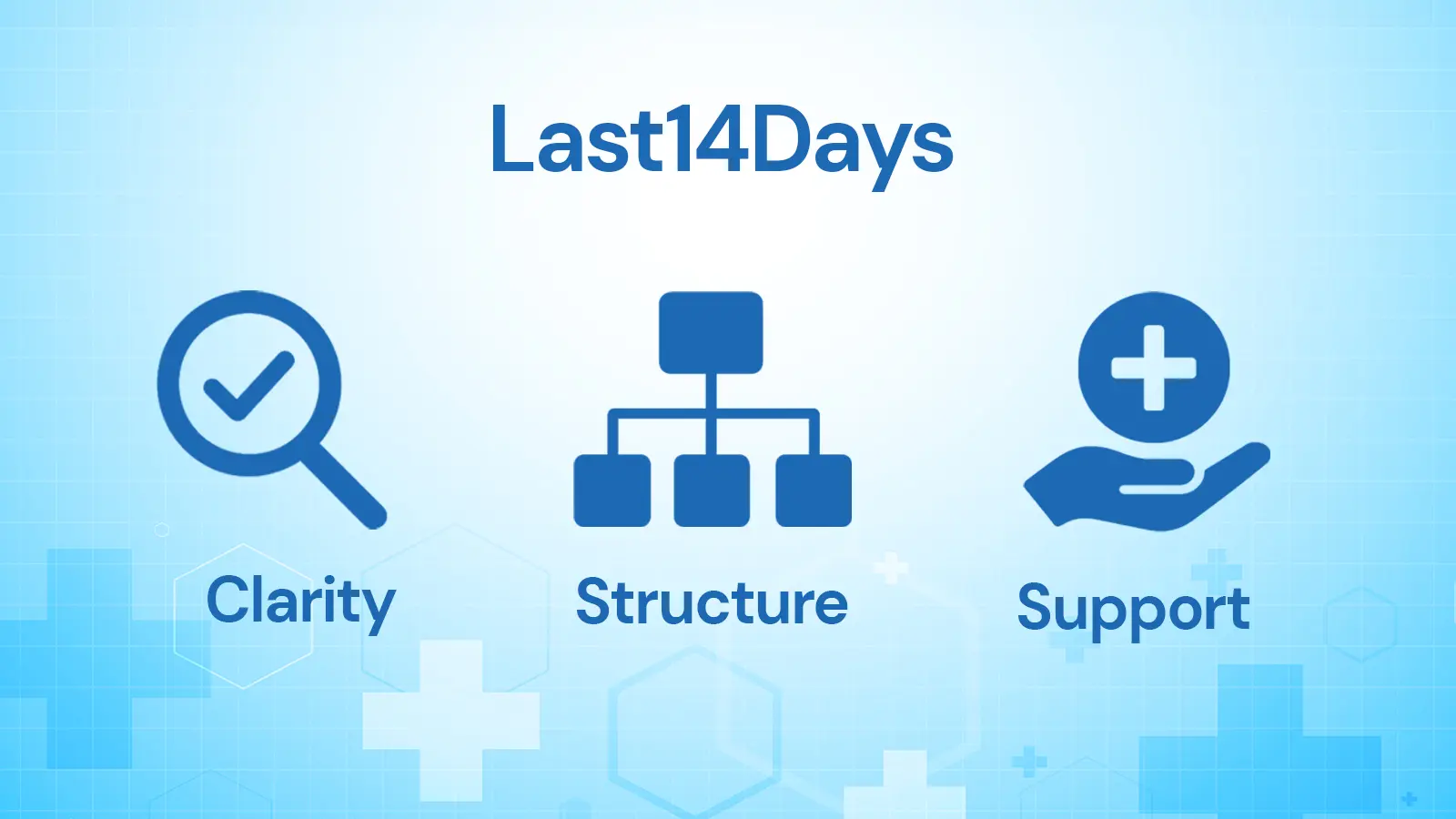
QliqSOFT Last14Days Workflow: Clarity, Structure, Support
In the final two weeks of a patient’s life, every moment becomes more fragile - and every decision is more meaningful. With QliqSOFT’s Last14Days Workflow, families and care teams move through this time with clarity, structure, and support.
It begins with a gentle introduction: families receive a short, compassionate guide called “What to watch for in the last 14 days.” Alongside it comes a secure link, inviting them to complete a simple readiness and observation check. Suddenly, what once felt like confusing changes now has a clear framework.
Next comes expectation-setting. Families understand why completing these short assessments matters, and what happens when they do - whether that means a timely nurse call, care plan adjustment, or emotional support visit.
Within minutes, key information is collected. Caregivers complete a brief, scored assessment, noting any changes in function, breathing, or level of awareness. The process takes only two to three minutes but captures critical signals that no phone call alone might reveal.
When thresholds are crossed, the system automatically triggers the Last14Days Care Plan. Nurses are notified, visits increase, medications are reviewed, families receive timely education, and documentation for higher levels of care - such as continuous home care or service intensity add-ons - is built right in. Escalation isn’t delayed; it’s seamless.
Finally, in the clinical adjustment phase, all findings, actions, and outcomes are documented and uploaded to the EMR. The entire team works with a clear picture - ensuring compliance, continuity, and compassion without additional administrative burden.
What could have been a period of uncertainty transforms into one of structured guidance, early intervention, and dignity - helping families feel supported while giving teams the tools to deliver the very best care in the final days.
Regulatory & Compliance Considerations
- HIPAA: PHI behind secure links; all submissions encrypted and time‑stamped.
- TCPA: Opt‑out language templated; quiet‑hours honored.
- CMS: Captures data supporting Hospice Visits When Death Is Imminent and quality metrics.
- SOC 2: QliqSOFT maintains SOC‑aligned controls.
QliqSOFT’s Last14Days Detection & Care Plan Solution
QliqSOFT’s solution contains:
- Scored caregiver‑friendly assessment (mobile, bilingual).
- Phase classifier (Stable / Declining / Transitional / Active Dying).
- Automation: notifications, care‑plan activation, documentation prompts.
- EMR Integration: webhook → API/HL7/FHIR/SFTP/CSV.
- Reporting: score trends, escalations, visit timeliness, after-hours escalations, caregiver confidence and satisfaction, nurse visits in last 3 days.
Best Practices
- Keep caregiver messages short, with one clear CTA.
- Always include the 24/7 number and explicit examples of when to call.
- Respect language & accessibility preferences.
- Standardize templates, allow local personalization.
- Review escalations within 2 hours during business hours.
- Close the loop with the caregiver: confirm receipt of the assessment.
Implementation Plan (30 Days)
This solution can be implemented quickly, as illustrated in the following example.
Prerequisites: Form the project team. The hospice provides a list of certifying clinicians, current documents, escalation rules, and baseline performance metrics.
Week 1: Map triggers, finalize questions, confirm opt‑out, and language variants.
Week 2: Configure assessment and automation; prepare escalation rules; set EMR write‑back.
Week 3: Pilot on one team/site; validate scoring and workflow; tune thresholds.
Week 4: Train staff, expand system‑wide, and monitor KPIs daily for two weeks. Optimize, as needed.
Month 6: Determine current KPI performance and measure improvement.
KPIs to Track
- % submissions by domain; % classified Transitional/Active Dying.
- Median time: caregiver submission → RN contact.
- % escalations resolved within SLA.
- Nurse/MSW visits in last 3 days (quality measure trend).
- Caregiver satisfaction pulse.
- Documentation completeness: phase score, triggers, EMR write‑back.
Conclusion
The last 14 days are predictable enough to plan for - but only if signs are captured consistently. QliqSOFT operationalizes consistency through scored assessments, automation, and integration, so families receive timely support and teams obtain defensible documentation. This is the clinical and operational foundation for trust, safety, and speed.
Frequently Asked Questions (FAQs)
What challenges do hospice teams face during the last 14 days of care?
During the final 14 days, hospice teams face increased care intensity, emotional stress for families, rapid clinical changes, and a higher need for coordination. Communication gaps, unclear escalation paths, and inconsistent documentation can make it difficult to provide timely and compassionate support.
How does the Last14Days workflow support hospice care delivery?
The Last14Days workflow focuses on clarity, structure, and support by aligning care teams around defined processes. It helps ensure consistent communication, timely interventions, and coordinated responses during the most sensitive phase of hospice care.
What does clarity mean in the Last14Days hospice workflow?
Clarity ensures that care teams, patients, and families understand what to expect, who is responsible for each step, and how concerns are addressed. This reduces confusion during rapid changes and helps maintain trust and confidence.
What type of support does the Last14Days approach provide to families?
The approach emphasizes proactive outreach, timely updates, and responsive communication. This helps families feel supported, informed, and reassured as they navigate emotionally challenging moments.
How are regulatory and compliance requirements addressed in the Last14Days model?
The workflow aligns care activities with hospice regulatory expectations by supporting accurate documentation, timely communication, and consistent care processes. This helps care providers maintain compliance while focusing on patient and family needs.
Which performance indicators help track success during the last 14 days?
Key performance indicators focus on responsiveness, care coordination, documentation completeness, and family feedback. Tracking these metrics helps hospice teams evaluate effectiveness and continuously improve care delivery.
-(1).0ad9ca7a6e.png)