Patients Want Secure Communication with Their Healthcare Providers - Here's Why
September 30, 2024
Patients want secure, convenient communication with healthcare providers via text and email for better engagement and faster responses. Healthcare providers must embrace secure digital tools to meet these needs.

In today's fast-paced world, communication has evolved dramatically, affecting every aspect of our lives. One area where this change has been particularly impactful is healthcare. As patients become more digitally savvy, they expect the same convenience from healthcare providers that they enjoy in other areas of their life. This includes the 65+ community and disadvantaged populations who, thanks to the pandemic, have made huge strides becoming more digitally savvy.
The ability to securely communicate with healthcare providers via text and email has emerged as one of the most desired features. But why is this so important to patients, yet not more common in healthcare? There is a fundamental disconnect between what patients want and what healthcare thinks they want.
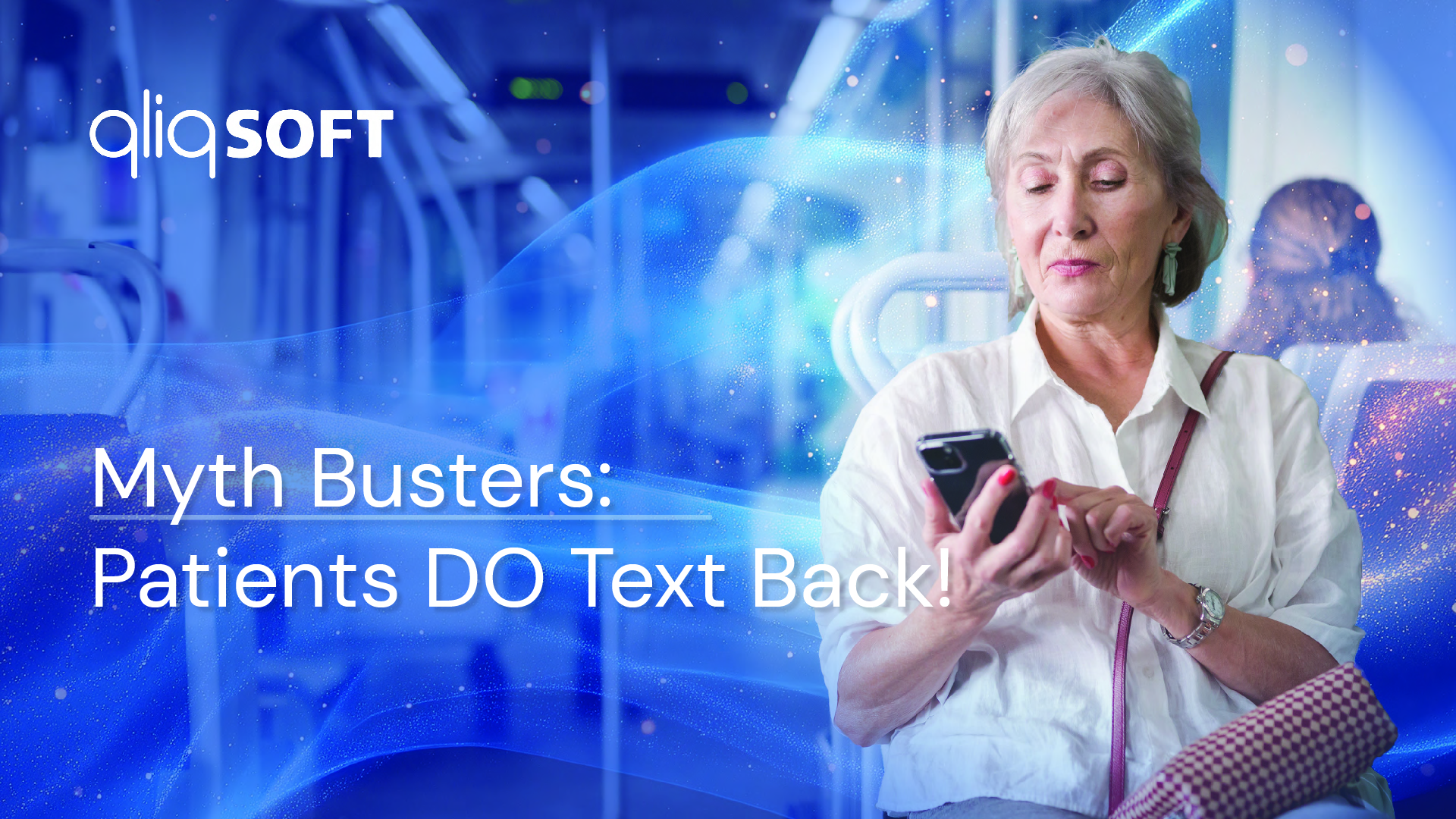
There is a common misperception in healthcare that patients will not text, especially if they are older and/or disadvantaged. National data proves otherwise.
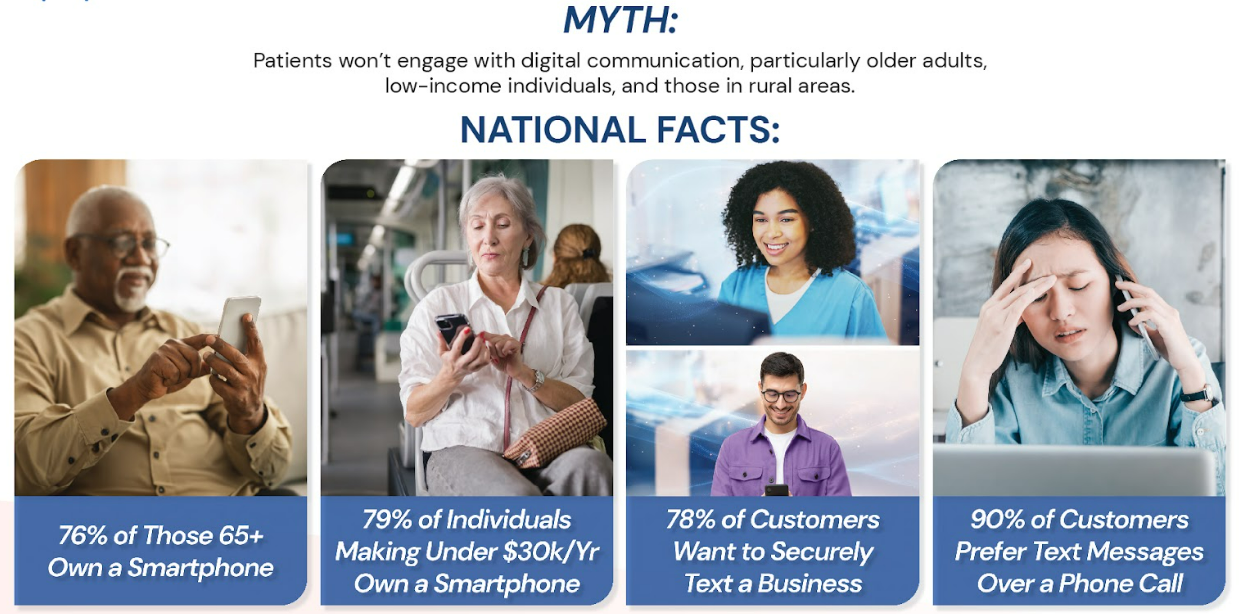
Our own client experience shows that patients do appreciate and respond to secure texts from their providers better than they answer phone calls. First Choice Neurology has 90% of their patients responding and taking actions recommended by the clinic. Their use spans patient intake, specialty medication onboarding and offering virtual visits to have secure conversations with their physician.
The Rise of Digital Health Communication
Traditionally, patients and healthcare providers communicated through phone calls or in-person visits. While these methods still play a crucial role, patients today are looking for more immediate, flexible, and convenient ways to communicate. Approximately 90% of patients aged 50+ use personal technology to stay connected and roughly 85% of smartphone users prefer mobile messages to emails or calls.
This trend makes sense. In a world where consumers can handle everything from banking to grocery shopping online, it’s only natural that they expect the same level of convenience in healthcare. Patients want the ability to:
- Receive reminders when it is time to schedule routine appointments and to schedule appointments easily - Managing appointment reminders through text or email can simplify the process, avoiding lengthy phone calls or back-and-forth scheduling conflicts, while improving health.
- Provide key information prior to the visit - Enabling patients to scan insurance cards, complete health risk assessments, and update personal information prior to the visit allows the care team to spend more time interacting with the patient about their health.
- Ask questions between appointments - Quick follow-up questions or clarification on medical instructions do not always need an in-person visit, a phone call, or an email to the physician. Physicians have been reporting more pajama time and burnout from responding to patient emails after hours and on weekends. Rather than alienating the patient by charging for physician email time, consider offering secure patient texting enabling the care team to help patients.
- Receive test results or updates - Rather than waiting for a call or visit, patients prefer to be promptly informed of their normal lab results or other updates via HIPAA-secure texting or email. This speeds information to the patient and reduces staff workload.
Why Patients Want Secure Digital Communication
1. Convenience and Accessibility
Patients have busy lives, and many find it difficult to carve out time for phone calls or in-person visits just to ask a simple question or receive updates. This is especially true for patients who rely on family and/or friends to get to an appointment. Because they are busy and not the healthcare experts, it is easy for the patient to lose track of the need for preventive visits. Secure text and email communication allow patients to reach their healthcare providers on their own time, whether during a work break or after hours. This kind of accessibility also opens the door for those in rural or underserved areas who may not have easy access to healthcare. It is particularly important for workers who cannot take time away from their job to sit on hold to schedule an appointment.
2. Faster Response Time
Email and texting can often lead to faster communication. Instead of leaving successive voice mail messages until the patient and provider can find time to talk live, patients can quickly reach out and get the information they need. This reduces stress, especially when awaiting test results or advice on a treatment plan. Secure communication channels enable healthcare providers to send updates, reminders, and test results efficiently, while maintaining patient privacy.
3. Improved Patient Engagement and Outcomes
Patients who can easily communicate with their providers tend to be more engaged in their care. Secure messaging allows providers to efficiently send reminders to patients that important wellness and monitoring visits are due, strengthening the provider patient relationship. This higher level of engagement reduces no shows and delivers better health outcomes, as patients are more likely to follow through on treatment plans and preventive care measures when they feel supported by their healthcare team.

Meeting Patients’ Expectations: What Healthcare Providers Can Do
Healthcare providers must respond to these evolving expectations by implementing secure digital communication platforms. Here is how they can meet patients' needs:
- Adopt secure communication platforms - Utilize HIPAA-compliant email and messaging platforms, like QliqSOFT’s, that offer end-to-end encryption and other safeguards. Select a platform that integrates with electronic health record (EHR) systems allow for seamless communication between patients and providers.
- Educate patients on your digital communication plan - Patients need to be informed that their provider is using secure patient texting and how they can trust the proactive outreach they receive is not spam. This communication can come through social media, posters in patient care areas, and coaching staff how to discuss this with patients. Approaches such as using logos, organizational brand colors in messages help build trust.
- Maintain a personal touch - Make sure your digital communication provides personalized responses that cater to the individual needs of the patient. Think about what you want to communicate (e.g., an appointment reminder) AND what the patient wants to know (parking directions, etc.) Incorporate the name of the physician or organization in the message. If you are using HIPAA-compliant forms, incorporate patient name and other data known about the patient instead of making them add it. Enable the patient to seamlessly transfer to a digital agent to discuss concerns and questions.
Conclusion
As healthcare continues to evolve, the demand for secure communication through text and email will only grow. Patients are seeking more flexibility, convenience, and faster access to their healthcare providers. But alongside these expectations comes an unwavering demand for privacy and security.
Healthcare providers who embrace secure communication tools will not only meet the needs of their patients but also improve engagement, trust, and health outcomes. The future of healthcare is digital, and secure patient-provider communication will play a critical role in shaping it.
By investing in secure technologies today, healthcare providers can ensure they stay at the forefront of this patient-centered evolution.