Top Strategies to Enhance Your Ambulatory Patient’s Experience, Part 1
July 12, 2023
Discover the challenges and opportunities faced by primary care providers (PCPs) as alternative care models disrupt the healthcare landscape. Learn why improving the patient experience is crucial for business success and explore practical digital solutions to prioritize customer service expectations, benefiting patients, staff, and organizations.


Making the Business Case to Take Action Now
Primary care providers (PCPs) are experiencing a tsunami of change as alternative care delivery models upend the traditional healthcare landscape. Amazon, Walgreens, CVC Health, Target, Google, Dollar General, and other retailers are fast becoming dominant competitors, offering ambulatory healthcare services more conveniently at a lower cost. These nontraditional players foresee big opportunities to rapidly expand and potentially capture as much as a third of the U.S. primary care market by 2030.
Primary care is the bedrock of the U.S. medical system. However, it is also the lowest paying of medical professions, with PCP providers serving as the patients’ first point of contact for common medical issues. These clinicians build longstanding relationships with patients and are responsible for detecting warning signs. They are the first point of contact, directing follow-up care to specialists and initiating referrals before a condition becomes a full-blown chronic disease.
Unfortunately, primary care often bears the brunt of many patient frustrations, including rising medical bills, poor insurance coverage, fewer practice hours, access issues, long wait times, burned-out clinicians, and labor shortages, exacerbating frustrated patients and causing them to turn away from the traditional primary care model. With so much disruption, healthcare leaders must take immediate action to upscale the patient experience ─ or lose market share.
Having invested billions of dollars in enterprise-wide electronic health record (EHR) systems for decades, C-suite executives of hospitals and health systems find themselves in a conundrum, already challenged with tighter budgets in today’s bumpy economy. To cope, Ed Marx, author and CEO of Marx Advisory suggests embracing a “scrappy innovation” approach, which rejects waiting weeks, months, or years for their EHR enterprise vendor to release a costly add-on patient engagement solution.
To get a jump on the competition, innovative healthcare leaders are opting for simpler, agile and affordable solutions - especially as digital maturity deepens, blazing new trails to create the future consumers and patients want. These forward-thinking providers know that by waiting years to act, they risk losing a third of their profitable business lines to the new market entrants.
This 3-part article series examines the patient experience from the patient’s perspective.
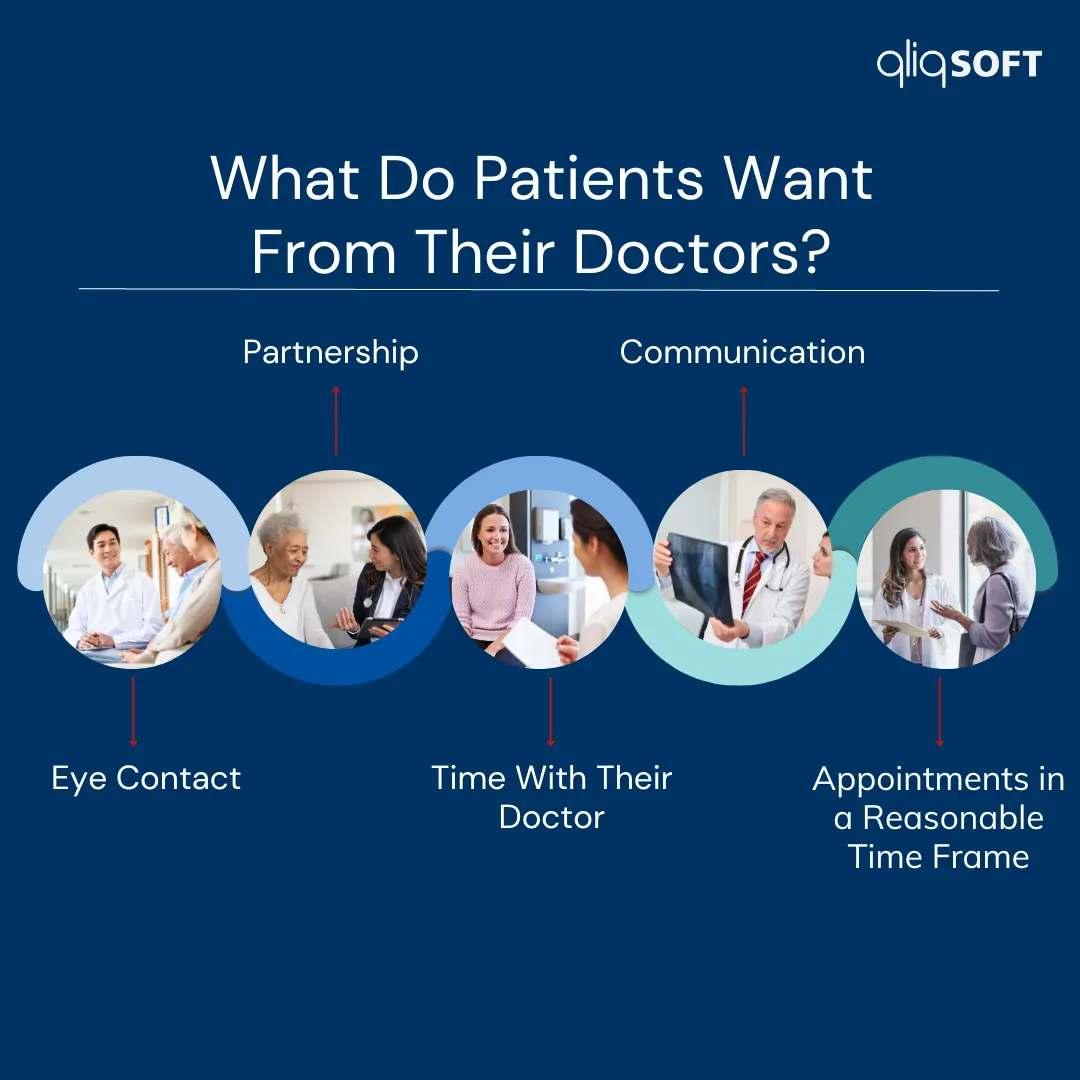
What do Patients Want?
In 2003, The BMJ, one of the oldest peer-reviewed medical trade journals published by the British Medical Association, published an article listing what patients want from their doctors that holds true today.
- Eye contact. Physician nonverbal behaviors have a significant impact on patients during consultations. Making direct eye contact during the encounter shows the other person that you care and are genuinely interested in what they are saying. It conveys empathy, trust, and emotional connection, especially with widespread electronic health record (EHR) use. When physicians make eye contact, patients report improved satisfaction.
- Partnership. Effective partnerships between the patient, doctor, and care team lead to better adherence, outcomes, and patient satisfaction. Given the cost of U.S. healthcare, it’s reasonable today to assume that patients want transparency on personalized cost, access to treatment, and diagnosis information to empower them throughout their health and wellness journey, delivered through new touchpoints such as using digital health technologies.
- Communication that they understand. Patients tend to be more engaged when they clearly understand their physician’s diagnosis and care instructions delivered in clear and concise terms. Most patients come to the doctor’s office in a state of anxiety or fear. They have trouble understanding a doctor's explanation of the diagnosis. Making the patient feel seen, heard, and understood using layman’s terms, visual images, and other communication techniques make visits go more smoothly.
- Time with their doctor. Patients want to spend more time with their doctor. They want time to explain their issues and have options explained to them. Today’s typical patients usually have multiple diseases to monitor and potential complications to watch for. However, a University of Chicago Medicine study found that most physicians don’t have enough time to fulfill all patient care needs.
- Appointments in a reasonable timeframe. With demand for healthcare services expanding due to the growth of the aging U.S. population, the country’s access to primary care physicians is not keeping pace with service needs, according to federal data. The U.S. could see a shortage of about 14,000 primary care physicians by 2035. Moreover, the average wait time to schedule a new patient with a primary care provider is 26 days in 15 of the largest U.S. cities, up from 24.1 days in 2017, the last year the survey was conducted.
Why Does Patient Experience Matter?
Patients have enhanced service expectations when meeting with their doctor or a care team member. If these expectations are unmet, they will increasingly seek other options. In the worst-case scenario, frustrated patients will only go to the doctor when necessary, potentially suffering health consequences.
In the face of multiple priorities and limited resources, healthcare leaders may question the value of measuring and improving the patient's experience with care. Yet, powerful market and regulatory trends, combined with increasing evidence linking patient experience to important clinical and business outcomes, make a compelling case to improve the patient experience.
- Better patient experience leads to better health outcomes
Patients with better care interactions are associated with important clinical processes and outcomes:
- Medication non-adherence is common. Research shows that when patients don’t take their medications as prescribed half the time, the health benefits of pharmacotherapies decline. An established relationship between a patient and physician or care team enables them to identify the root cause of the issue to resolve. Eight common reasons for intentional nonadherence are fear, cost, misunderstanding, too many medications, lack of symptoms, mistrust, worry, and depression.
- Outcomes improve with a better experience. Many studies show that good patient experience correlates with better outcomes, including prevention and condition management. For example:
- At both the practice and individual provider levels, patient experience positively correlates to care processes for prevention and disease management.
- Patients' experiences with care, particularly communication with providers, correlate with adherence to medical advice and treatment plans.
- Patients with better care experiences often have better health outcomes.
- Patient experience is good for business
Cultivating a positive patient experience is associated with financial indicators and loyalty. Meeting patient needs, preferences and lowered costs are good for business as well as for patients. Patients keep or change providers based on their experience. This includes relationship quality, a major predictor of patient loyalty.
- Good patient experience is associated with lower medical malpractice risk.
- Improving patient experience also results in greater employee satisfaction, reducing turnover.
- Patients keep or change providers based on experience and relationship quality.
- Positive patient experiences contribute to patient retention and loyalty
The transition to more consumer-driven healthcare has made every patient interaction and touchpoint, from the intake process to self-scheduling of the virtual visit and eventual follow up, more critical to ensuring the highest level of patient engagement, satisfaction, and retention. In fact:
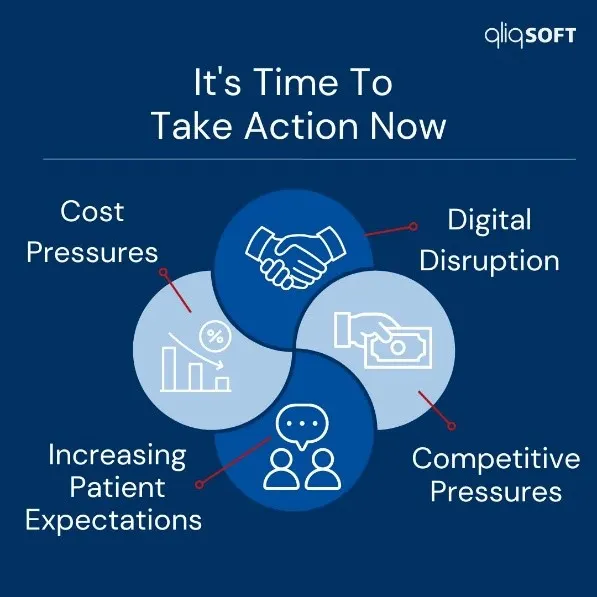
- 82% of patients say quality customer service is the most important factor they consider when choosing care.
- Amazon and other digitally native companies have created growing expectations for a convenient retail-like experience. Providers must realize that patients prefer speed, selection, and ease akin to online shopping.
“Amazon's hyperfocus to deliver experiences and operations built around the needs of the customer has set the industry bar. Retailers who were confident their loyal customer base would choose familiarity over novelty quickly lost favor in the marketplace. For retailers who no longer exist, the realization that customers prefer speed, selection, and ease over brand familiarity came too late.” - Stacey Shulman, Vice President, Internet of Things Group / GM Health, Life Sciences and Emerging Technologies, Intel Corporation
- Of the 2021 Health and Life Sciences Global Experience Survey of nearly 12,000 people in 14 countries, the most frequent source of bad experiences among respondents was inefficient visits to medical providers at 23%. Twenty-nine percent of negative medical experiences prompted the patient to switch providers.
Practice viability depends on improving the patient experience
To counter the loss of patients to retail-like disrupters, providers need to offer a level of convenience at a lower cost to compete with alternative sites of care.
- A recent MIT Center for Information Systems Research (CISR) study of more than 500 companies found that senior leaders believed that more than 30 percent of revenue would be lost to digital disruption over the next five years if they didn’t change how they did business.
A Bain & Company report predicts new primary care models from nontraditional players, such as retailers, could capture as much as a third of the U.S. primary care market by 2030. https://www.bain.com/insights/primary-care-2030/
- Retailers today focus primarily on wellness, vaccines, and common colds, although they are positioning themselves to play a bigger role in primary care, behavioral health, and chronic condition management.
- Big retailer alternatives to the primary care office, urgent care center, and emergency room deliver care at a more affordable cost than other sites of care. For the 10 most common diagnoses, the average charge per claim on aggregate was:
- $38 less through a retail care site as opposed to claims submitted by urgent care centers, and
- $471 less than claims submitted by physician offices.
- Lower malpractice risk can be achieved through patient satisfaction. Evidence shows 1% of all hospital patients nationwide are harmed in some way and have legitimate grounds to make a claim. Yet only 3% of these patients proceed to file a lawsuit. When these patients were asked to cite their reasons, the majority named one of four types of communication problems: feeling deserted, feeling devalued, feeling dissatisfied with the information provided, or feeling that their perspective was not understood. These “triggers” all relate to the patient’s perception of how the physician treated them.
The need to act is now to improve patients’ current care experience and business sustainability. Our second article explains the practical ways to prioritize customer service expectations using “low hanging fruit” digital solutions that can be deployed quickly and easily, showing immediate benefit to your patients, staff and organization. These short-term, high-impact projects make a significant, positive difference in regular day-to-day interactions and help build momentum. They contribute to modernizing your longer-term digital transformation strategy to solve problems. Your patients can look forward to an intuitive, more connected and personalized experience centered around their desires for 24/7 access and convenience.