Lone Worker Safety for Home Health and Hospice Nurses
February 14, 2026
Home health and hospice nurses work alone in patients’ homes, often after dark and far from backup. Lone worker safety gives them a discreet way to call for help and gives the office a clear view of where they are while they are on the clock. Visit Path does both inside the QliqCHAT app nurses already use.

Workplace violence (WPV), encompassing physical, verbal, psychological, and sexual assault, is a prevalent issue in all healthcare settings, including home healthcare.
Recent care-at-home safety issues highlight that home health, hospice, and personal care clinicians are facing significant and rising risks in the field, ranging from workplace violence to unsafe home environments. About a third of respondents experienced both verbal and emotional abuse daily, whereas 56.6% of participants reported physical violence at some point while working with their current agency.
A majority of home health nurses say they do not feel adequately protected during patient visits. Top safety measures nurses want include buddy systems, access to full patient history, and emergency alert devices.
In addition to direct threats, staff must also navigate homes where illegal drugs, firearms, poor sanitation, falls hazards, and unstable family dynamics increase the likelihood of both physical and psychological harm, pushing agencies to rethink safety protocols, triage processes, and real-time monitoring tools for field clinicians.
Protecting home health and hospice staff in the field is now a strategic imperative, not a nice-to-have, and operations leaders need practical tools that fit seamlessly into daily workflows. Staff safety tools that combine proactive safety workflows, SOS capabilities, and location awareness can significantly reduce risk, support compliance, and improve both staff retention and family trust.
Why home health and hospice staff safety needs an upgrade
Home health and hospice clinicians routinely enter unfamiliar homes, travel alone, and work evenings or weekends, often in higher-risk neighborhoods or rural areas with limited backup. Safety incidents may be rare, but when they occur, they are highly impactful and deeply destabilizing for both staff and leadership.
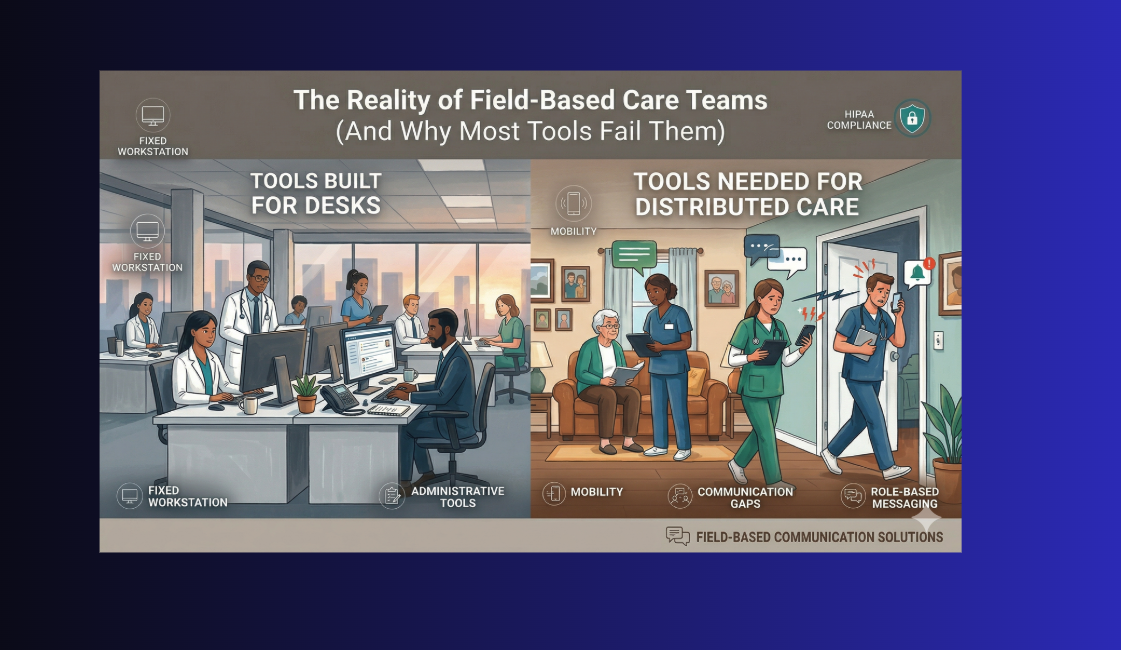
Traditional approaches - manual check-ins, paper logs, and ad hoc text messages - are not enough for modern home health and hospice operations. They create blind spots in three critical areas:
- Real-time visibility into where staff are and whether they are safe.
- Rapid escalation when a clinician feels unsafe, or a situation changes suddenly.
- Proof of visit and location data for internal review, quality, and EVV or payer requirements.
This is where a new class of staff safety tools, designed specifically for field-based care, becomes essential.
Five elements of modern staff safety tools for field clinicians
High-performing staff safety tools share five common capabilities that work together as an integrated safety net.
- Safety workflows are embedded into daily visit scheduling and routing, so staff do not need a separate app or process to stay safe.
- GPS-based location awareness that lets operations or on-call coordinators see who is in a visit, who is nearby, and who is available in real time.
- Discreet SOS or distress alerts that a clinician can trigger if they feel threatened, are trapped in an escalating family conflict, or encounter an unsafe environment.
- Real-time dashboards that display staff status (available, in-visit, off-duty), enabling faster decision-making when something does not look right.
- Secure messaging to coordinate backup, redirect visits, or notify leadership, without exposing PHI through consumer texting tools.
These capabilities not only improve personal safety, but they also support a culture of safety and accountability that surveyors, payers, and accrediting bodies increasingly expect.
How Visit Path protects home health and hospice staff in the field
QliqSOFT's Visit Path is purpose-built for care-at-home organizations and is particularly well-suited as a staff safety tool for home health and hospice because it blends safety, coordination, and visit verification into a single workflow.
Key capabilities that matter to home health and hospice operations leaders include:
Live GPS staff map
A browser-based dashboard shows a live map of every clinician who has turned Visit Path on for their shift, with each person's current location and status. Location sharing starts when they clock in and stops when they clock out.
Schedulers and clinical leaders can quickly identify the nearest appropriate clinician to respond to urgent needs while maintaining an eye on staff working in higher-risk areas.
Discreet SOS and distress alerts
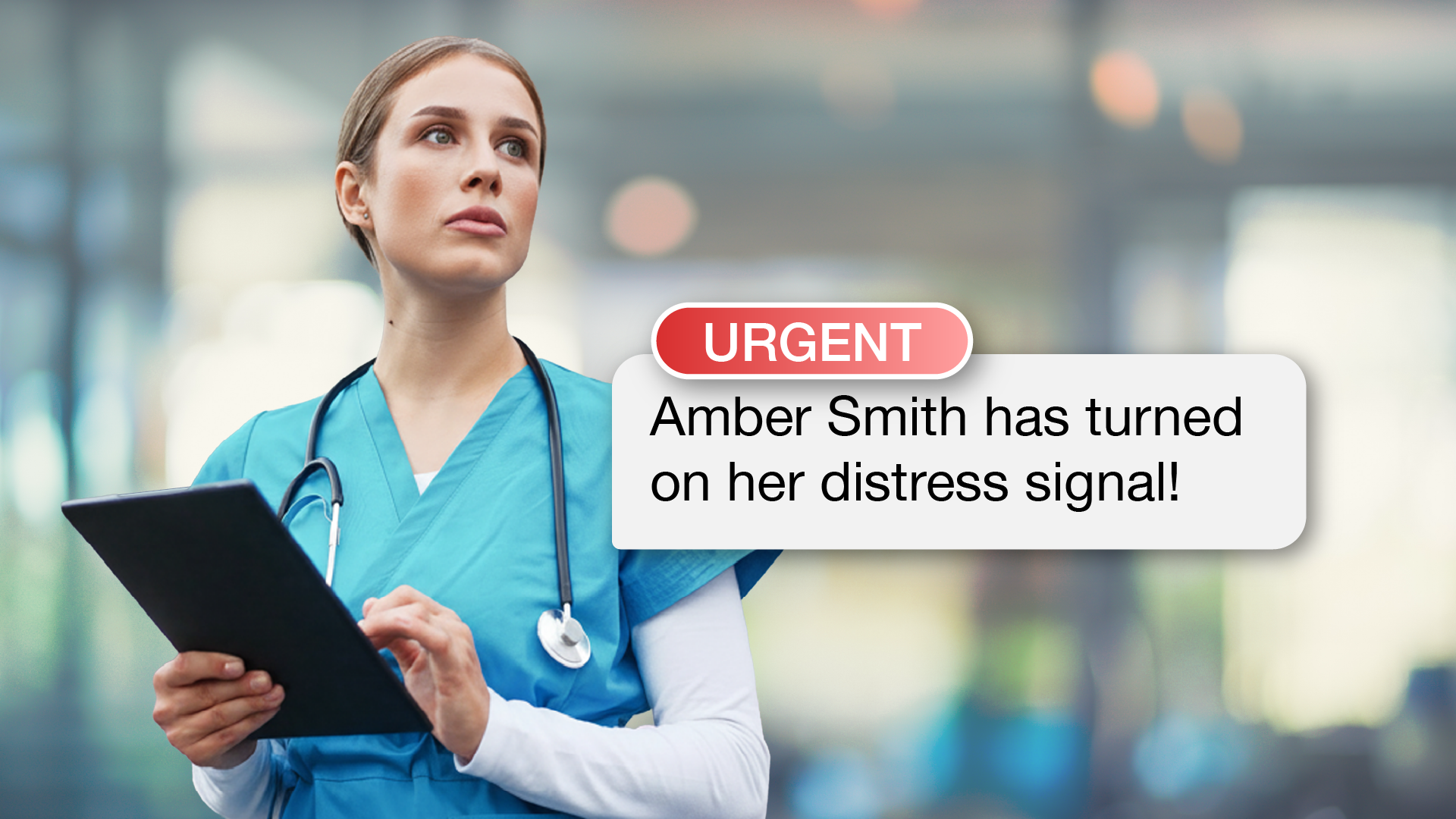
Visit Path includes an instant alert capability so a clinician can discreetly notify admins or supervisors of a safety issue in the field.
Once an alert is triggered, office staff see the clinician's location and can urgently send support, contact authorities, or reroute nearby staff, transforming a manual phone-tag process into a structured safety response.
Safety-aware visit workflows
Operations teams can see which patient visits are scheduled, in progress, or completed in real time, along with visit durations and staff assignments.
This visibility helps identify potential red flags - such as an overdue visit in a known high-risk neighborhood - and prompts proactive outreach before an incident occurs.
Integrated secure communication
Once the right clinician is identified for an urgent or safety-sensitive visit, Visit Path leverages QliqSOFT secure messaging to send the patient address and key visit details directly, avoiding risky consumer texting.
Families benefit as well, with real-time confirmation of who is coming, how far away they are, and when they will arrive - reducing anxiety and potential conflict at the door.
Data to support Quality Assurance and risk review
Visit Path captures time in, time out, and visit duration with GPS verification, supporting internal quality programs.
Leadership gains a defensible record of staff location and visit activity that can be used in incident reviews, safety committees, and ongoing improvement plans.
In short, Visit Path functions as a comprehensive staff safety tool while simultaneously optimizing routing and after-hours field staff scheduling, giving operations leaders leverage across multiple priorities.
Building a proactive safety culture with Visit Path
Technology alone cannot create safety, but it can make a safety culture actionable. Staff safety tools such as Visit Path give leaders the infrastructure to move from reactive policies to proactive, repeatable workflows.
Home health and hospice operations leaders can use Visit Path to:
- Standardize check-in/check-out expectations for all home visits, informed by GPS status and visit duration.
- Align with OSHA and internal employee safety policies by embedding clear escalation paths and documentation into daily operations.
- Support education on situational awareness by pairing policy training with a practical distress alert that staff can rely on during real-world encounters.
- Reduce after-hours workloads by giving on-call coordinators a live window into who is clocked in and where they are, instead of depending solely on manual phone calls.
Clinicians feel seen and supported when they know someone can locate them quickly and respond if they signal a problem. That confidence can directly influence recruitment, retention, and overall satisfaction in an emotionally demanding line of work.
Next steps for home health and hospice leaders
For home health and hospice organizations, now is the time to evaluate whether your staff safety tools match the realities of care delivered in patients’ homes. If your teams still rely on static schedules, manual check-ins, and consumer texting, the risk exposure is significant - both for staff and for the organization.
By adopting QliqSOFT's Visit Path, home health and hospice leaders can combine safety workflows, SOS tools, and real-time location awareness into a single, unified platform that also improves operational efficiency. It is part of the Caregiver Scheduling and Staff Safety bundle, alongside on-call scheduling and visit confirmations, and it is used across hospice and home health teams.
Ready to protect your field staff?
If you are looking to harden your field staff safety program while improving responsiveness to families, Visit Path offers a concrete, technology-enabled path forward.
Request a DemoFrequently Asked Questions (FAQs)
What is the best staff duress tool for home health teams?
One that is already in the clinician’s hand when something goes wrong. For home health teams, that means a duress alert inside the app staff already use for their work, sent to your own on-call team with the clinician’s location, rather than a separate device that ends up left in the car.
What staff duress tools support home health worker safety?
Three do most of the work: a discreet SOS the clinician can trigger in the room, live location the office can see while the clinician is clocked in, and secure messaging to coordinate backup. Visit Path combines all three in the QliqCHAT app, so staff carry one tool instead of three.
What is the best staff duress tool for lone clinicians?
One that works when the clinician cannot make a call. A lone clinician needs a discreet alert that does not escalate the situation in the room, a location the office can see while they are on the clock, and someone on your own team who responds, not an outside call center.
What does location-aware staff duress alerting look like for caregiver safety?
The caregiver turns on location sharing when they clock in. If they trigger an alert, the office and on-call team see who they are and where they are on a live map, and can send support, contact authorities or reroute a nearby colleague. When they clock out, sharing stops.
Does Visit Path integrate with EHR or EMR systems?
Yes. QliqSOFT connects to the EHR and EMR systems care-at-home organizations already run, through standards-based interfaces where they exist and other integration options where they do not. Bring your system to a demo and we will show you how the connection works for your team.