Offboarding Done Right: Best Practices for Removing User Access in Healthcare
July 9, 2025
Offboarding in healthcare is crucial for maintaining trust and securing data. Surprisingly, 20% of data breaches come from former employees retaining access. To avoid HIPAA violations and legal issues, follow these best practices.


QliqSOFT understands that employee departures are a routine part of managing any organization. But in healthcare, where trust and data security are paramount, how you handle system access during offboarding isn’t just an IT task - it’s a compliance safeguard and a patient protection measure.
Did you know?
Up to 20% of data breaches involve former employees retaining unauthorized access to systems and data. (Source: IBM)
We’re committed to helping healthcare organizations keep their communication tools secure. That means not only designing robust systems, but also guiding teams to use them safely and strategically.
Here’s why it matters.
When Timing Goes Wrong: A Real-World Lesson
Recently, a customer shared a cautionary experience with us. An administrator at a healthcare organization terminated an employee and informed them of the decision before revoking their QliqSOFT account access. In the short window between the conversation and account removal, the employee sent an inappropriate message to the entire team.
The administrator disabled the account within minutes, but the damage was already done.
Unfortunately, this scenario isn’t uncommon. Whether the intent is malicious or emotional, a single message can erode team morale and expose organizations to reputational, operational, or compliance risks.
“Think of it as changing the locks before informing a tenant - security comes first.”
The Hidden Costs of Poor Offboarding
Beyond immediate disruption, inadequate offboarding procedures can lead to:
- HIPAA violations, if terminated employees retain access to protected health information
- Legal liability, from inappropriate communications sent using company systems
- Team disruption, affecting patient care quality and staff productivity
- Data breaches, damaging your organization’s reputation and patient trust
Offboarding Best Practices: Wipe, Disable, Remove
Here is the safest, most effective way to offboard an employee in your QliqSOFT environment:
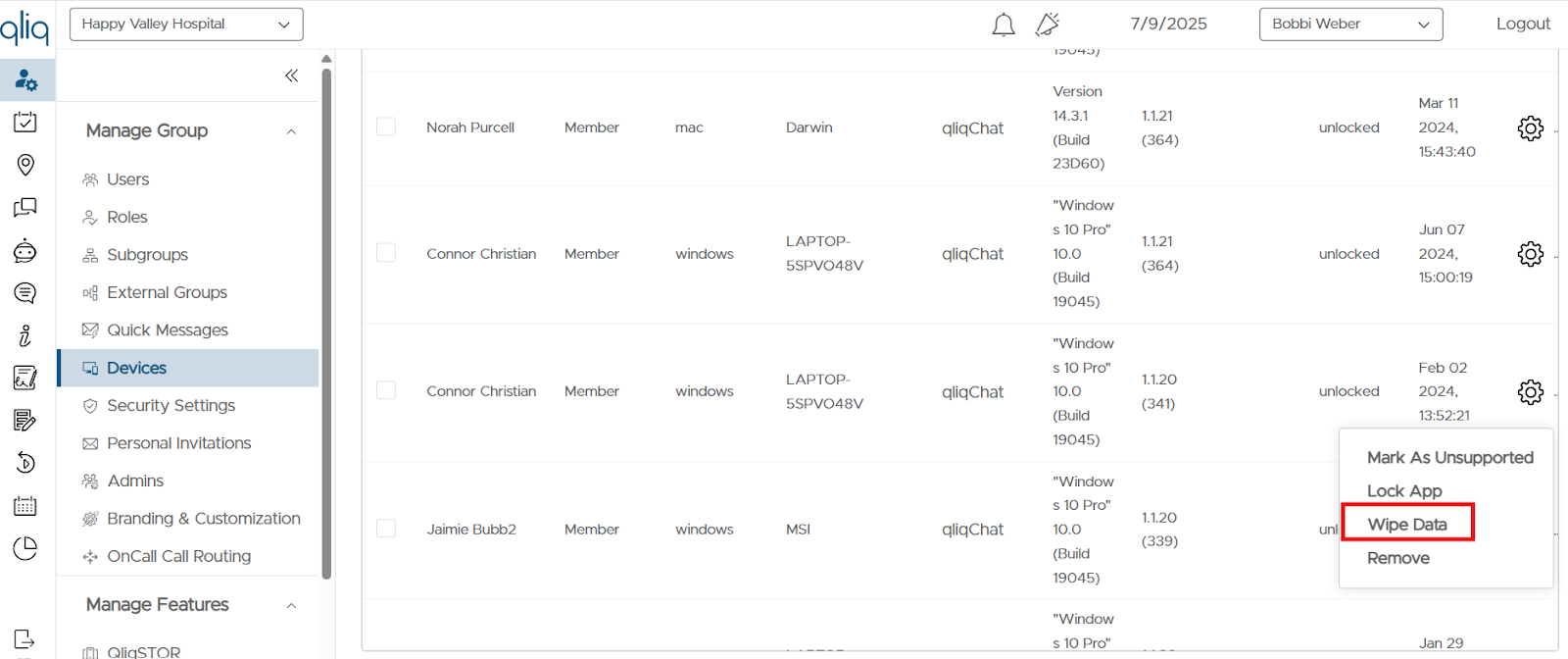
1. Wipe the User’s Account Data
Before any offboarding conversation, initiate a secure data wipe on the user’s devices. QliqSOFT provides data wipe capabilities to clear any sensitive information cached locally. Even if their phone, tablet, or computer falls into the wrong hands later, your organization’s data remains protected.
This safeguards both your internal communications and your patients’ privacy - critical pillars of HIPAA compliance.
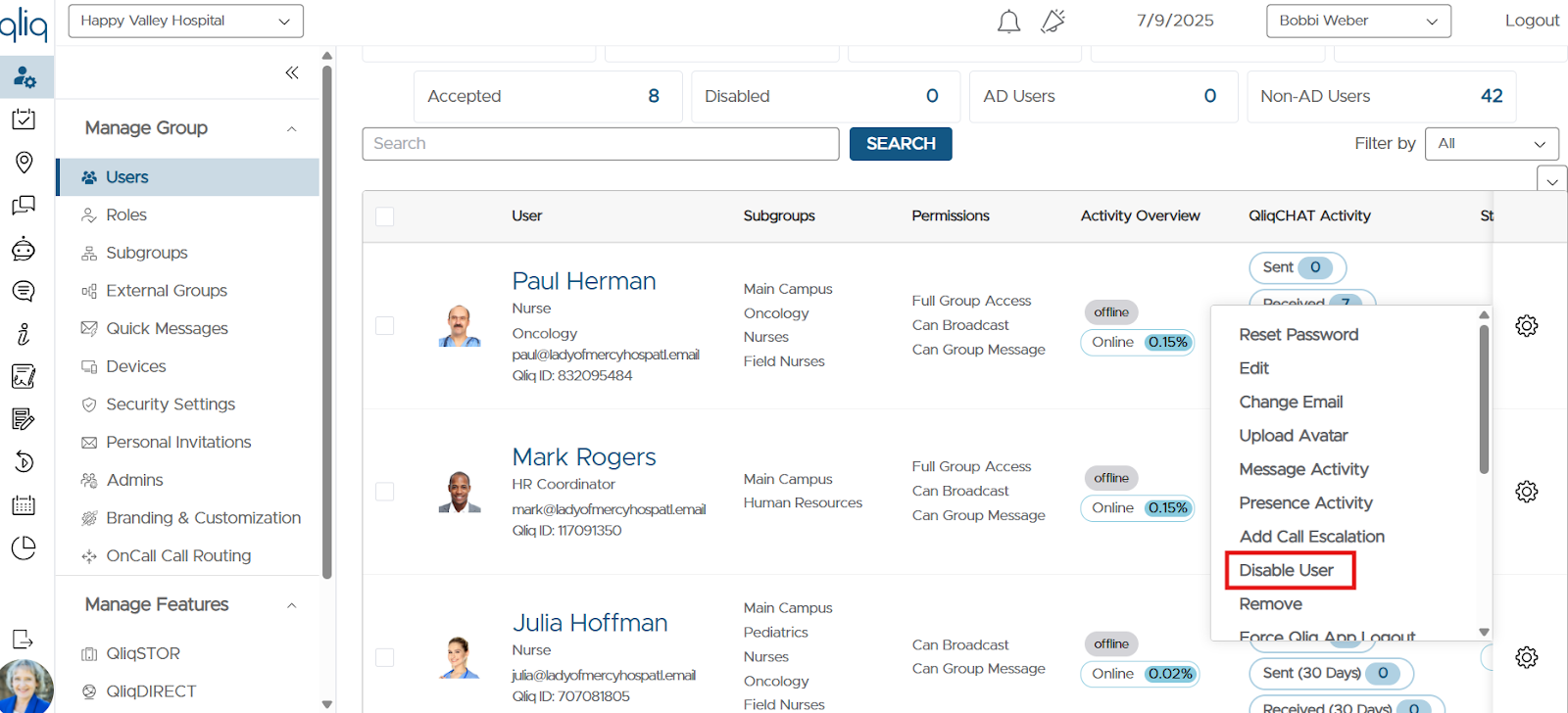
2. Disable the User’s Account
After wiping device data, disable their account access. This prevents the user from logging in, sending messages, or accessing sensitive information after the conversation takes place.
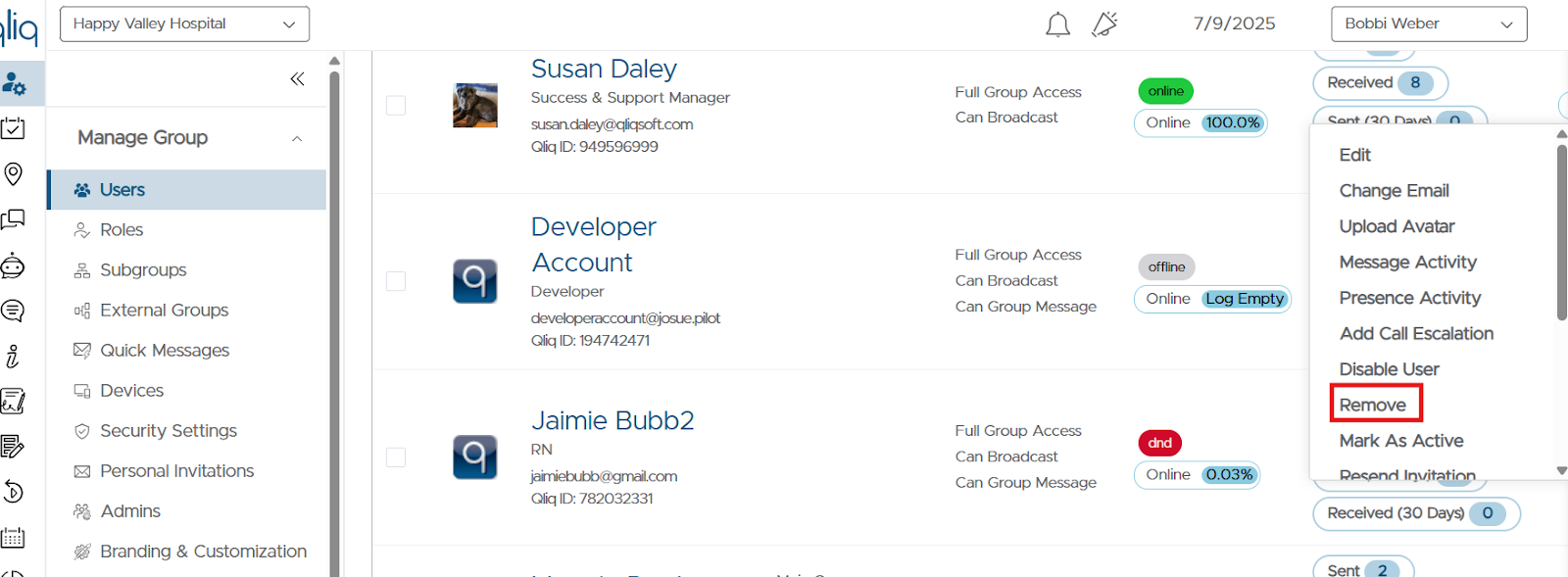
3. Remove the User from the Organization
Finally, remove the user from your QliqSOFT organization entirely to ensure:
- Their contact profile is deleted from team directories
- They’re removed from all group chats and communication threads
- No lingering access points remain in your environment
Key Takeaway:
Offboarding Checklist: Wipe → Disable → Remove
The proven sequence to protect PHI and prevent security gaps.
Creating Your Offboarding Checklist
Consider implementing a standardized offboarding checklist that includes:
- Coordination between HR, compliance, and IT departments
- Clear timelines for each step of the process
- Documentation requirements for compliance and auditing
- Regular reviews to ensure procedures are followed consistently
Looking Ahead: Message Recall on the Horizon
We understand the stakes when offboarding goes wrong. That’s why we’re exploring a future admin-side message recall feature, allowing administrators to retract messages sent by a user - even after delivery.
While this capability is still in development, it reflects our broader commitment: giving your organization better oversight and control without compromising your team’s ability to collaborate efficiently and securely.
Offboarding Should Never Be Rushed
Employee departures are inevitable. Preventable security lapses aren’t.
By following the wipe, disable, remove sequence, you maintain operational control, protect sensitive data, and uphold the trust your patients and teams place in you every day.
Remember: In healthcare, every security decision impacts patient trust. A well-executed offboarding process isn’t just about protecting your organization - it’s about honoring your commitment to patient privacy and care quality.
Ready to Strengthen Your Offboarding Protocols?
Contact QliqSOFT today to learn how our secure communication solutions and purpose-built offboarding safeguards can support your compliance and operational security goals.
Frequently Asked Questions (FAQs)
Why does offboarding user access matter so much in healthcare?
Because communication tools often contain sensitive information, and if access isn’t removed quickly, it can create security, privacy, and compliance risks.
What’s the risk of delaying access removal after an employee leaves?
Even a short delay can be enough for inappropriate messages, unauthorized access, or operational disruption, especially if the person still has access to conversations and account tools.
What are the hidden costs of poor offboarding?
Poor offboarding can lead to HIPAA violations, legal liability from inappropriate communications sent using company systems, team disruption that affects care quality and productivity, and data breaches that damage reputation and patient trust.
What does “wipe the user’s account data” mean?
Before removing the user from active communication, initiate a secure data wipe on the user’s device(s) to clear any cached/conversation-related information stored locally.
When should an organization wipe a user’s account data?
Before the employee’s access is entirely removed, any locally stored data is cleared first, reducing the risk of information lingering on a phone, tablet, or computer.
What should a standardized offboarding checklist include?
Coordination among HR, compliance, and IT; clear timelines for each step; documentation requirements for compliance and auditing; and regular reviews to ensure procedures are consistently followed.