A Patient Engagement Chatbot that Actually Engages Patients
January 10, 2020
Chatbots will take their place in healthcare during 2020 as a very scalable and valuable clinical tool for proactively exchanging care-related information between patients and their care teams, as well as between care team members themselves. Chatbots aren’t new. In fact, the first chatbot, named Eliza, was created by MIT professor Joseph Weizenbaum in 1966. Eliza, however, lacked two essential elements that, today, enable the use of chatbots as a tool that actually gets patients involved in their own personal care. These elements are smart devices that offer an SMS texting feature and artificial intelligence (AI).


Chatbots will take their place in healthcare during 2020 as a very scalable and valuable clinical tool for proactively exchanging care-related information between patients and their care teams, as well as between care team members themselves. Chatbots aren’t new. In fact, the first chatbot, named Eliza, was created by MIT professor Joseph Weizenbaum in 1966. Eliza, however, lacked two essential elements that, today, enable the use of chatbots as a tool that actually gets patients involved in their own personal care. These elements are smart devices that offer an SMS texting feature and artificial intelligence (AI). These 2 technologies combine to bring chatbots to life providing personalized patient experiences that scale.
Smart Technology Continues Growing
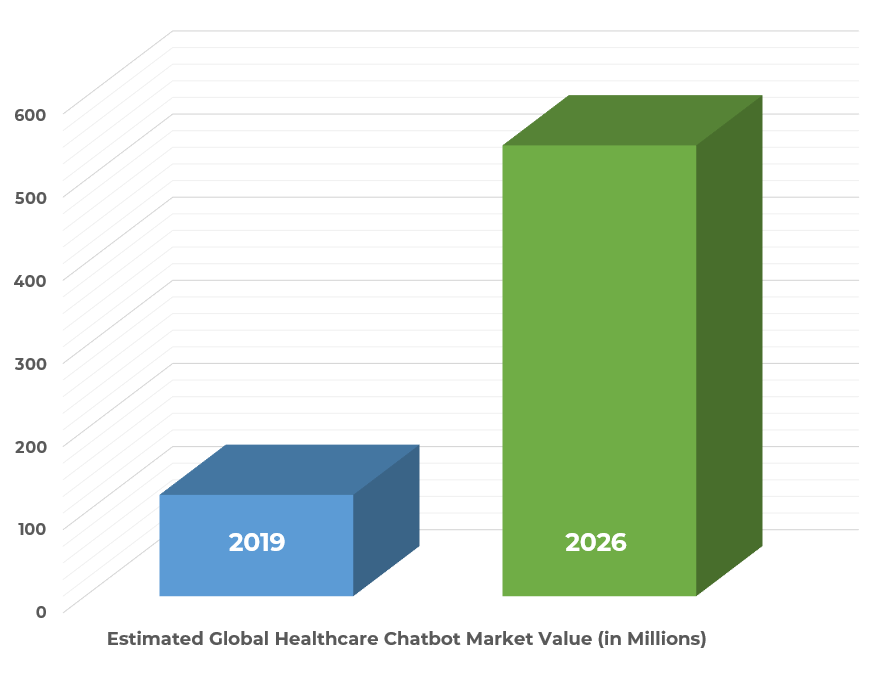
Studies show that 81% of Americans have a smartphone and 62% of them use their smartphone to gather health-related information. 90% of physicians use their smartphone to view electronic health records, communicate with their team, and reference information. All of these numbers are growing and are expected to continue growing making smartphones combined with conversational chatbot mobile texting a valuable clinical tool.
A New Era of Chatbots
On January 9, 2020, QliqSOFT announced the launch of its healthcare chatbot platform, Quincy. At QliqSOFT, we believe chatbots are the future for real patient engagement. We see many applications for conversational chatbots, as do our customers. We’ve built a chatbot platform as a place for us and our customers to explore, learn, adapt, and improve; so that, together, we can solve the challenges of patient engagement and improve the delivery of healthcare services.
Chatbots Have Found Their Place
Chatbots addressing care-specific use cases that include pre-configured intents and dialogue flows or customizable chatbots can be built to suit very unique care delivery needs. This flexibility enables the benefits of chatbots across the entire care continuum to provide limitless scalability, regardless of the healthcare setting. Healthcare providers are able to build and deploy HIPAA-compliant, AI-driven, conversational chatbots that:
- Share more care-related information
- Facilitate patient self-service
- Reduce readmissions
- Drive better outcomes
- Increase patient engagement
- Develop patient satisfaction
- Improve workflow
- Grow revenue
- Reduce costs
- Improve billing efficiency
Care-Related Objectives Make Chatbots Shine
We know patients prefer communicating via mobile text messaging for many of their healthcare needs. Conversational patient engagement platforms must embrace that preference and provide patients care-related information via mobile texting and web-based messaging when the patient wants it. Extending access to healthcare information, chatbots serve to enable communication between patients and their care teams on the patient’s terms. Going a step further, we believe chatbots should engage patients in conversations that achieve healthcare objectives. Our goal at QliqSOFT isn’t to simply converse with patients; our goal is to help care teams engage their patients to improve patient experience, outcomes, and satisfaction.
The real value of chatbots is revealed when the tool is used as a platform for care campaigns meant to engage patients around specific conditions or treatment via mobile texting. By incorporating specific care-related objectives with AI-driven, conversational chatbots care teams are able to activate patients in their own healthcare to achieve better outcomes and reduced costs.
Chatbots Cover the Gamut

At any point on the care continuum, AI-driven, conversational chatbots provide value. The many care-related communication possibilities are unlimited.
- Visit Verification
- Intake and Post-Discharge Needs
- Emergency Room Patient Concierge
- Discharge Follow-up
- Symptom Checking
- Answering FAQs
- Appointment Reminders
- Pre-Visit Documentation
- Directions to Healthcare Facilities
- Medication Compliance
- Chronic Care Management
- Care Education
- Billing
The Role of Chatbots is Only Just Beginning
This is just the beginning of activities that chatbots can automate. Beyond personalized care-related communication activities, AI-driven, conversational chatbots also provide value in any care setting.
- Hospitals are able to solicit patient information, streamline workflows, reduce wait times, and improve call center efficiency.
- Post-acute facilities can use chatbots to proactively monitor patient health by soliciting vital patient data and providing care-related information. In the event a patient’s condition should indicate potential risk, chatbots can escalate the issue to a care team member.
- Private practice is able to provide after-hours access to care-related information, scheduling, appointment reminders, improve workflow and reduce demands on front desk personnel.
- Pharmacies are able to improve medication compliance and manage patient prescriptions, securely capture patient health contact info, and increase sales.
For some additional reading, I’ve compiled a list of articles that share how chatbots are emerging within the healthcare industry.
How Chatbots Will Shape the Future of Healthcare
AI Chatbots in Healthcare: Transform Patient’s Engagement with Healthcare Providers
Influence of Chatbots and AI to the Healthcare Industry
5 Use Cases for Chatbots in Healthcare
We’re Here to Help
QliqSOFT Quincy Chatbot Platform is available to healthcare organizations, life science companies, payers, and medical device manufacturers that want to innovate value-based care by improving patient engagement, patient outcomes, and patient satisfaction. Please contact Qliqsoft to learn more regarding use cases for your client’s needs.
Frequently Asked Questions (FAQs)
What is a patient engagement chatbot?
A patient engagement chatbot is a conversational assistant that helps patients interact with a healthcare organization through guided, automated messages. It supports self-service tasks such as answering common questions, sending reminders, collecting information, and guiding patients before and after visits.
Why are patient engagement chatbots becoming more common in healthcare?
As smartphone use and digital habits increase, healthcare chatbots align with how patients prefer to communicate. They help providers scale engagement without increasing staff workload, especially for repetitive tasks like FAQs, reminders, intake prompts, and follow-ups.
How do healthcare chatbots improve patient self-service?
Chatbots allow patients to complete tasks on their own time - such as getting information, confirming steps, or receiving instructions - without waiting for phone calls. This improves convenience, reduces call volume, and keeps staff focused on higher-priority needs.
Can chatbots help reduce hospital readmissions?
Yes. Chatbots help reduce readmissions by keeping patients engaged after discharge through structured follow-ups, education, and check-ins. Timely guidance helps patients follow instructions and identify concerns earlier.
How do patient engagement chatbots drive better outcomes?
Chatbots support consistent communication, reminders, education, and follow-up prompts, helping patients stay on track throughout their care journey. Better adherence and timely touchpoints can improve clinical and operational outcomes.
How do chatbots increase patient engagement and satisfaction?
Chatbots make communication simpler and more responsive. Patients can get answers quickly, receive reminders, and stay informed between visits, improving the overall experience and satisfaction.
Do chatbots help healthcare teams improve workflow efficiency?
Yes. Chatbots automate repetitive administrative conversations such as FAQs, reminders, follow-ups, and pre-visit steps. This reduces staff burden and improves workflow efficiency.
How do chatbots help with appointment reminders?
Chatbots send timely appointment reminders and guide patients with next steps such as confirming, rescheduling, or reviewing preparation instructions. This reduces no-shows without increasing outbound staff calls.